Key Takeaways
- A product development growth strategy should start with customer research, feedback, and data rather than simply adding more products.
- Prioritising simplicity and convenience can strengthen customer experience and perceived value.
- Product expansion can waste resources when businesses overlook what customers actually value.
- Successful product development requires testing, learning, and adapting the product mix based on customer needs and commercial results.
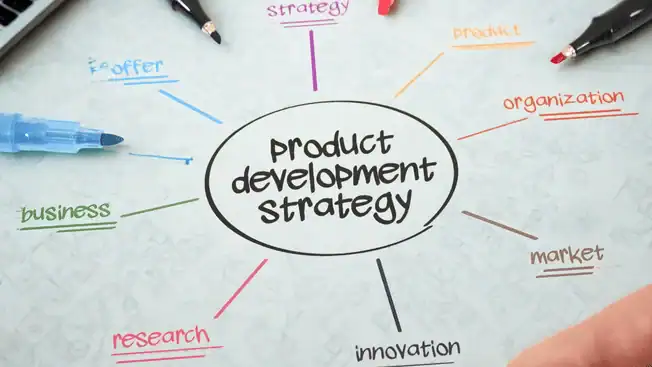
Product development can create new revenue opportunities, strengthen customer loyalty, and help businesses respond to changing market needs. However, growth does not always come from adding more products. Without sufficient customer research, product expansion can increase complexity, consume resources, and deliver less value to customers. So, how can businesses develop an effective product development growth strategy?
>Download Now: Free PDF How to Drive Pricing Strategy to Accelerate Sales & EBIT Growth
Successful product development starts with understanding customer needs and identifying where a product or service can create genuine value. Customer feedback, research, and data can help businesses identify opportunities while allowing marketing, sales, and pricing teams to make better-informed decisions.
However, adding products and services without understanding what customers actually want can create unnecessary complexity and divert resources from higher-value opportunities. A product development growth strategy should therefore focus not only on what a business can add, but also on what customers value and what the business can deliver effectively.
At Taylor Wells, we believe customer interviews, feedback, and data analysis can help businesses identify product opportunities and make more effective growth decisions. Listening to customers and simplifying their experience can help businesses differentiate in the market and avoid missing valuable revenue opportunities.
What Is a Product Development Growth Strategy?
Product development refers to the process of developing, modifying, or introducing products and services to meet customer needs. A product development growth strategy takes this process further by deliberately using product decisions to create profitable growth.
The most effective approach starts with understanding what customers actually need rather than simply adding more products or services. It should follow five key steps:
- Research customer needs: Use customer feedback, interviews, and data analysis to understand what customers value, which problems they need solved, and where their experience can improve. This helps answer a fundamental product question: what should we develop, for whom, and why would customers value it?
- Identify and prioritise opportunities: Use customer research to determine whether a new product, feature, or change solves a genuine customer problem and offers enough potential value to justify the investment. Consider simplicity and convenience as part of this assessment, as a wider product range does not automatically create more value.
- Assess customer value and commercial and operational feasibility: Consider customer demand alongside pricing, costs, margins, resources, operational capacity, simplicity, convenience, and the ability to deliver the product consistently.
- Test the offering: Test products, features, or changes before committing significant resources. Use customer responses and commercial results to determine whether the opportunity is worth pursuing.
- Refine the product and product mix: Use customer responses and commercial results to improve the offering, adjust the product mix, or stop an approach that is not creating enough value.
Together, these steps create a practical product development growth strategy: understand customer needs, identify the strongest opportunities, assess customer value and commercial and operational feasibility, test the offering, and refine the product mix based on evidence. This approach can help businesses pursue growth without adding unnecessary complexity.
See whether your pricing is under controlWhat Are the Benefits of Product Development for Business Growth?
A product development strategy can support business growth in several ways. It can help businesses:
- Create new revenue opportunities: New or improved products can address unmet customer needs and create additional sources of revenue.
- Strengthen customer loyalty and retention: Products that solve genuine customer problems can improve the overall experience, strengthen loyalty, and encourage repeat purchases.
- Differentiate from competitors: Developing products around customer needs can help businesses offer clearer value in competitive markets.
- Improve resource allocation: Research and testing can help businesses identify which product opportunities are worth pursuing before committing significant resources.
- Support profitable growth: Product decisions should consider customer value alongside pricing, costs, margins, and the resources required to deliver the offering.
Product Development Growth Strategy: Should You Add More Products?
Product expansion can support revenue growth and diversification, but it does not automatically create value. Without considering customer needs, businesses may waste time, effort, and resources developing products that customers do not value.
A broader product range can also increase complexity for both customers and employees. In some cases, simplifying an offering may create more value than adding another product or feature.
The following examples show the risks of developing products or changing offerings without fully understanding customer needs, expectations, or behaviour.
1. Dove’s ‘Real Beauty’ Bottle Experiment
Dove’s ‘Real Beauty’ campaign included a limited-edition packaging experiment featuring body wash bottles in different shapes. The concept was intended to celebrate diversity, but the unusual designs also attracted criticism from consumers who questioned their practicality. The example is less about a failed product launch than about the risks of allowing a creative packaging concept to overshadow the customer experience.
2. Starbucks and Pepsi
Starbucks, in partnership with Pepsi, developed Mazagran, a chilled, lightly carbonated coffee drink. The product generated initial curiosity, but that interest did not translate into sustained demand. The example highlights an important product development lesson: initial interest is not necessarily evidence of repeat-purchase potential. Businesses need to test whether customers will continue choosing a product after the novelty wears off.
3. Coca-Cola’s 1985 New Coke Formula
Facing competition from Pepsi, Coca-Cola conducted extensive consumer research and blind taste tests to develop a new formula for its classic drink. In taste tests involving nearly 200,000 consumers, the new formula was preferred to the original Coke. However, many customers strongly rejected the change when it reached the market.
The backlash showed that taste tests did not fully capture the emotional value customers placed on the original formula and the Coca-Cola brand. Coca-Cola brought the original formula back as Coca-Cola Classic 79 days after New Coke was introduced, initially selling both products at the same time.
4. Pepsi’s Crystal Pepsi
Pepsi launched Crystal Pepsi, a clear, caffeine-free cola, in 1992. The product reflected the growing interest in clear beverages at the time and attracted significant initial attention. However, demand declined, and Pepsi eventually withdrew the product from the market. The example shows that strong initial interest does not necessarily indicate long-term product-market fit. Factors such as taste, positioning, competition, and execution can all influence whether a new product succeeds.
Together, these examples show why businesses need more than initial customer interest when developing or changing products. They need to understand customer expectations, test the offering, and assess whether demand is likely to be sustained.
McDonald’s: Balancing Customer Demand With Operational Complexity
McDonald’s provides a useful example of the tension between customer demand and operational complexity. Adding products or menu options can give customers more choice, but it can also make restaurant operations more difficult to manage. More choices can increase operational complexity, potentially affecting kitchen workflows, staffing, preparation times, and speed of service. This means businesses need to consider whether they have the operational capacity to deliver a product change effectively.
McDonald’s introduced All Day Breakfast in 2015 in response to customer demand. However, serving breakfast items alongside the regular menu also created operational challenges. In 2019, McDonald’s refreshed its All Day Breakfast offering and gave local restaurants greater flexibility to focus on popular items. The company said the changes were intended to reduce complexity and improve speed and convenience for customers.
The example shows why customer demand needs to be considered alongside operational capability. A product can be popular with customers while still requiring changes to the way a business operates and delivers it efficiently and profitably.
〉〉〉 Get Your FREE Pricing Audit 〉〉〉
Bottom Line
Product development involves creating new products or altering existing ones to meet customer needs and create new revenue opportunities. When done well, it can support sales growth, strengthen customer loyalty, and improve market position.
A well-thought-out plan starts with an outside-in perspective and focuses on what customers actually value. Business growth isn’t always about adding more products or services, particularly when doing so increases complexity without creating enough customer or commercial value.
Avoid making major product decisions based solely on guesswork. Instead, use research, testing, and customer feedback to reduce uncertainty and refine your approach. Businesses should also assess willingness to pay, pricing, margins, costs, and operational requirements to determine whether a product opportunity can support profitable growth.
A customer-focused approach can help businesses decide which products to develop, which to improve, and which opportunities to leave behind. This can support sustainable growth without adding unnecessary complexity.
For a comprehensive view of building a great pricing team to prevent a loss in revenue, download a complimentary whitepaper on How to Drive Pricing Strategy to Accelerate Sales & EBIT Growth.
Are you a business in need of help to align your pricing strategy, people and operations to deliver an immediate impact on profit?
If so, please call (+61) 2 9000 1115.
You can also email us at team@taylorwells.com.au if you have any further questions.