Key Takeaways
- Margin pressure often reflects weak pricing power, which is why traditional product pricing models are facing increasing scrutiny.
- Trade customers buy productivity, reliability, and certainty, not just products.
- Businesses that monetise customer outcomes retain stronger pricing power.
- The future of trade retail pricing is built around value creation, not product transactions.
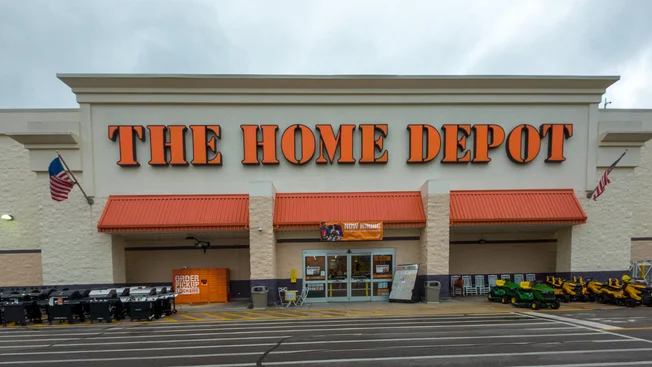
Home Depot’s Billion-Dollar Bet Raises Questions About Product Pricing Models
Traditional product pricing models are coming under pressure as trade customers increasingly value productivity over products.
Home Depot just made a billion-dollar bet on professional customers. Not on products. Not on price. On productivity.
The retail giant’s acquisition of SRS Distribution reflects a broader shift in trade retail. The focus is moving away from selling products and towards helping customers get jobs done faster, easier, and with less friction.
That raises an important question.
What does Home Depot understand about margin growth that many Australian distributors and manufacturers don’t?
The answer matters because many trade retail businesses are facing a frustrating reality. Sales are holding up. Margins are not.
Read This CEO Pricing Strategy To Improve Margin & EBIT
The Pricing Power and Margin Problem
When margins come under pressure, the usual explanations arrive quickly.
Costs are rising. Competition is increasing. Customers have more information. All of these factors are real.
However, they do not fully explain why many businesses struggle to improve profitability despite maintaining revenue.
The deeper problem is structural. Many businesses are still relying on product pricing models designed for a market that no longer exists.
For years, product knowledge, availability, and relationships created pricing power. Today, customers can compare products quickly. Competitors can source similar products. Product differences are becoming harder to maintain.
As a result, many businesses continue generating revenue while finding margin growth increasingly difficult.
This creates an uncomfortable question for leaders.
If sales remain healthy, why is profitability becoming harder to defend?
Often, the answer has less to do with costs and more to do with what the business is actually charging for. Many product pricing models focus heavily on products while customers increasingly value outcomes.
See whether your pricing is under control
Why Product Pricing Models Often Ignore Customer Value
One of the biggest pricing mistakes in trade retail is treating trade customers and consumer customers the same way.
They buy differently.
Consumers often focus on features, affordability, and immediate purchase price. Trade customers focus on productivity, reliability, and total cost of ownership.
A contractor purchasing equipment is not simply buying a product. Instead, they are buying confidence that a project stays on schedule.
When deliveries are delayed, labour costs can increase, deadlines can be missed, and clients can become frustrated.
Likewise, a product failure can end up costing far more than the original purchase price.
In other words, trade customers often buy productivity.
Yet many product pricing models remain built around product mark-ups and catalogue prices rather than customer outcomes.
Over time, that weakens pricing power and puts pressure on margins.
The key question is: Does your pricing recognise the difference between customers who buy products and customers who buy outcomes?
Will Shoppers Pay More for a Better Retail Experience 🛍 Podcast Ep. 90!
What Happens When Pricing Models Meet Commoditisation
Many trade retail categories are becoming increasingly commoditised.
Customers can compare specifications online. Competitors can match products more easily. Price transparency continues to increase.
When that happens, traditional product pricing models become difficult to sustain.
Businesses that lead with product features often find themselves trapped in price conversations.
Every discount becomes easier to justify.
Every price increase becomes harder to defend.
As a result, margins gradually erode.
The businesses losing margin are often not selling the wrong products.
They are monetising the wrong value.
That is why trade retail leaders need to ask a difficult question.
What are you actually selling?
If the answer remains the product itself, your pricing model may be more vulnerable than you realise.
Why Some Businesses Outgrow Traditional Product Pricing Models
Not every business experiences the same margin pressure.
Some continue to maintain strong pricing power despite operating in competitive markets.
They tend to share three characteristics.
First, they define what productivity means for their customers.
Second, they quantify the value of that productivity.
Third, they build their commercial model around it.
This is where Home Depot’s strategy becomes relevant.
The company is investing heavily in serving professional customers through fulfilment, availability, service, and support.
These investments help customers complete projects more efficiently.
The value is not simply the product. The value is what the product helps the customer achieve.
Businesses that move beyond traditional product pricing models are often better positioned to protect margins and avoid unnecessary discounting.
The Shift Beyond Product Pricing Models Is Already Happening
Customer expectations are changing faster than many product pricing models.
Trade customers increasingly expect speed, reliability, technical expertise, inventory availability, and responsive support.
These factors influence purchasing decisions every day.
The product remains important. However, it is increasingly becoming the entry ticket rather than the primary source of value.
Consider a busy contractor.
Would they rather save a small amount on a product or avoid a costly project delay?
Would they rather buy the cheapest option or work with a supplier that consistently solves problems?
For many trade customers, the answer is obvious.
They are buying certainty.
Yet many businesses continue pricing as though the product alone drives the purchasing decision.
What Businesses With Strong Pricing Power Changed
The businesses succeeding in this environment did not start with a new pricing methodology.
They started with a different way of thinking.
Instead of asking, “What is this product worth?” they asked, “What is this outcome worth to this customer?”
That shift changes everything.
It moves the conversation away from cost-plus thinking and towards customer value.
This shift reshapes how businesses position themselves.
Sales teams also communicate value differently.
Most importantly, it creates a stronger foundation for pricing power.
The businesses protecting margins today are often the ones that define value through outcomes rather than products.
〉〉〉 Get Your FREE Pricing Audit 〉〉〉
Pricing Power Lesson from Home Depot
Home Depot did not make a billion-dollar bet because products are becoming more important.
It made that bet because professional customers increasingly value productivity.
Customers want jobs completed faster.
They also expect fewer delays.
Many are looking for less friction throughout the process.
This is not simply a supply chain decision.
It is a pricing philosophy.
The biggest threat to trade retail margins is not rising costs or aggressive competition. It is continuing to rely on product pricing models while customers increasingly value outcomes.
Business leaders should ask whether their current product pricing models reflect what customers truly value today. Pricing teams should evaluate whether their pricing structures capture the value of productivity, reliability, and certainty rather than simply the cost of products.
If your organisation is facing margin pressure, now is the time to reassess what customers are really paying for. If you would like further insights, advice, or assistance in identifying value drivers, improving pricing power, or developing a more outcome-focused pricing strategy, reach out to our team. We help businesses turn customer value into sustainable margin growth.
Read This CEO Pricing Strategy To Improve Margin & EBIT
Are you a business in need of help aligning your pricing strategy, people, and operations to deliver an immediate impact on profit?
If so, please call (+61) 2 9000 1115.
You can also email us at team@taylorwells.com.au if you have any further questions.